
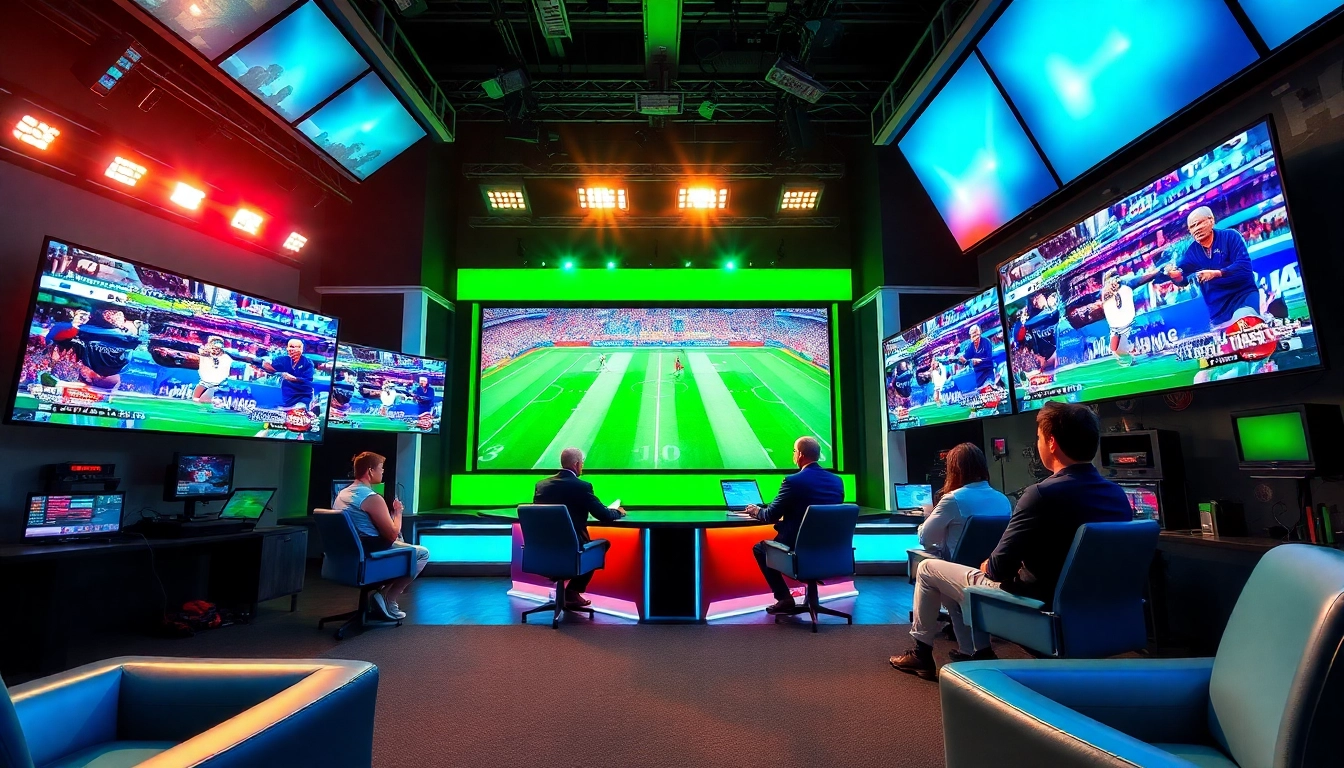
Understanding Sports Broadcasting
Definition and Importance of Sports Broadcasting
Sports broadcasting is a dynamic field that involves the live or recorded transmission of sporting events through various media platforms, including television, radio, and online streaming services. It serves a crucial role in bringing sports entertainment to millions of fans worldwide, creating a sense of community and belonging. This form of media not only provides the thrill of live action but also engages audiences through pre-game analyses, post-game discussions, and ongoing coverage of sporting events.
As one of the most consumed forms of content globally, Sports Broadcasting influences fan behavior and engagement, driving ticket sales, merchandise purchases, and overall interest in sports. With the rise of digital platforms, the significance of sports broadcasting has only grown, enabling fans to access content on-demand and participate in discussions across social media channels.
Historical Evolution of Sports Broadcasting
The journey of sports broadcasting began with radio broadcasts in the early 20th century, which allowed fans to listen to live play-by-play commentary of games. The first-ever sports broadcast occurred in 1921 when a boxing match was aired, paving the way for a new way of experiencing sports. The advent of television in the 1950s revolutionized the landscape, allowing viewers to watch games in real-time, bringing a new level of excitement. Iconic moments like the „Miracle on Ice“ captivated audiences, demonstrating the power of visual storytelling.
As technology advanced, so did sports broadcasting. The introduction of cable television in the 1980s expanded the number of channels dedicated to sports, highlighting niche sports and giving previously smaller sports a platform. The digital age further transformed the industry; the rise of the internet and streaming services allowed fans to watch events on various devices, anytime and anywhere. This evolution has continued into the present day with advancements in augmented and virtual reality, creating immersive viewing experiences for sports fans.
The Role of Technology in Sports Broadcasting
Technology has profoundly reshaped the way sports broadcasting operates. High-definition video, instant replay, and advanced graphics have improved the viewer experience. Technologies such as drones and 360-degree cameras provide unique perspectives, enhancing storytelling. Additionally, real-time analytics supported by artificial intelligence offer in-depth insights into player performance and game strategies, enriching the broadcasting narrative.
Moreover, social media integration has created a two-way communication channel, allowing broadcasters to engage with fans directly. Viewers can contribute their insights, ask questions, and participate in polls, making the viewing experience interactive. As technology continues to advance, the sports broadcasting industry must adapt, ensuring that it meets the evolving preferences and demands of its audience.
Key Elements of Effective Sports Broadcasting
Essential Skills for Sports Broadcasters
A successful sports broadcaster possesses a variety of skills that contribute to engaging audiences. Strong communication skills are paramount; broadcasters must articulate complex plays and statistics clearly and concisely. Knowledge of the sport is also crucial, as it allows broadcasters to provide valuable insights and context that enrich the viewer experience.
Technical proficiency is another essential skill. Understanding equipment, software, and broadcast strategies enables broadcasters to deliver high-quality content consistently. Furthermore, adaptability is vital; the fast-paced nature of live sports means that broadcasters must think quickly and adjust their narratives based on unfolding events.
Building Rapport with the Audience
Building a connection with the audience is a fundamental element of effective sports broadcasting. Broadcasters should strive to convey enthusiasm and passion for the sport, as this can resonate with viewers. Developing a unique persona that reflects authenticity enhances relatability. Engaging the audience through storytelling—sharing personal anecdotes or emotional moments—can deepen the connection, making fans feel involved and invested in the broadcast.
Furthermore, inviting audience participation through social media platforms helps foster a sense of community. Broadcasting an audience’s reactions or opinions during live events can create a more interactive viewing experience, making fans feel appreciated and valued.
Utilizing Visuals and Audio Effectively
The implementation of powerful visuals and compelling audio is instrumental in capturing and maintaining viewer attention. Effective use of graphics can enhance understanding; key player statistics, game scores, and even animated graphics illustrating plays provide context that can resonate with fans. High-quality audio is equally important; clear commentary blended with the natural sounds of the game immerses viewers in the experience.
Additionally, utilizing graphics during crucial moments, like game-winning plays or significant player achievements, enhances excitement and isn’t lost on the audience. Broadcasters should leverage editing techniques that not only entertain but also inform, creating a balanced and captivating viewing experience.
Challenges in Sports Broadcasting
Dealing with Technical Difficulties
Technical difficulties are an inherent challenge in sports broadcasting. Live events are unpredictable, and various factors—from equipment malfunctions to internet outages—can impact broadcast quality. Broadcasters need to have contingency plans in place. Such plans may include backup equipment, alternative communication methods, and a team prepared for immediate troubleshooting.
Practicing adaptability is also essential; quick thinking during technical failures can help to maintain audience engagement. For instance, pivoting to pre-recorded segments, expert interviews, or even acknowledging the issue with humor can keep viewers informed and entertained.
Managing Live Broadcast Pressure
The pressure associated with live broadcasting can be intense. Broadcasters are required to perform in real-time, making split-second decisions while maintaining a professional demeanor. To manage this pressure effectively, thorough preparation is essential. Familiarity with the teams, players, and sport can help broadcasters feel more confident.
Employing relaxation techniques—such as deep breathing or positive visualization—before going live can enhance focus and control anxiety. Additionally, teamwork within the broadcasting crew can reduce stress; clear communication and support among team members create a more cohesive and resilient environment.
Navigating Ethical Considerations
Sports broadcasting often raises ethical questions regarding bias, representation, and the portrayal of athletes. Broadcasters must strive to maintain impartiality, especially when covering contentious issues. Providing a balanced perspective is crucial to building trust with the audience. Adhering to regulations and standards set by broadcasting authorities also reinforces credibility.
Moreover, ethical considerations extend to how athletes are portrayed. Broadcasters should aim to humanize athletes, respecting their privacy and dignity while acknowledging their achievements. Sensationalizing negative incidents can tarnish reputations and undermine the integrity of the sport. Prioritizing ethical reporting fosters a more respectful and responsible broadcasting environment.
Emerging Trends in Sports Broadcasting
Impact of Streaming Services
The rise of streaming services has dramatically changed the sports broadcasting landscape. Fans can now access a wide array of sports content without being tethered to traditional cable subscriptions. Platforms like online streaming services offer flexibility and convenience, allowing viewers to tailor their viewing experience based on personal preferences.
These platforms often incorporate innovative features, including personalized content recommendations, interactive viewing options, and multi-sport access. Broadcasters must adapt by considering partnerships with streaming services, offering exclusive content or enhanced viewer experiences, such as behind-the-scenes access or interactive elements during live events.
The Rise of Esports Broadcasting
Esports has rapidly grown in popularity, creating a new genre within sports broadcasting. Competitive gaming events draw millions of viewers, and broadcasters are now tasked with adapting traditional sports coverage strategies to this unique landscape. Esports broadcasts often utilize innovative formats, incorporating player statistics, strategic analyses, and commentary to engage audiences.
Complementing this trend, some broadcasters are exploring hybrid formats. Merging traditional sports with esports—such as featuring events where professional athletes compete in video games—can attract diverse audiences, bridging the gap between gamers and traditional sports fans.
Integration of AI and Data Analytics
The integration of artificial intelligence and data analytics in sports broadcasting is transforming how content is created and consumed. AI tools can analyze vast amounts of data, generating insights that provide context during broadcasts, such as player performance metrics or predictive analyses of game outcomes. These insights allow broadcasters to engage viewers with enhanced storytelling and strategic discussions.
Moreover, data analytics can optimize viewer engagement; understanding audience preferences—such as which sports or teams attract the most attention—can help shape content planning. Integrating AI can also assist in automating production tasks, streamlining workflows to ensure consistent and high-quality broadcasts.
Measuring Success in Sports Broadcasting
Key Performance Indicators (KPIs)
Measuring success in sports broadcasting revolves around identifying relevant Key Performance Indicators (KPIs). Metrics such as viewer ratings, audience retention, and social media engagement are essential for understanding a broadcast’s reach and effectiveness. Tracking these metrics over time offers insight into the effectiveness of specific strategies.
Additionally, viewer feedback can provide valuable qualitative data; surveys or monitoring social media sentiment can help identify strengths and areas for improvement in broadcasts. Overall, a comprehensive KPI analysis allows broadcasters to make data-driven decisions to enhance future performance.
Viewer Engagement Strategies
Engaging viewers effectively is crucial for successful sports broadcasting. Broadcasters should seek to create interactive experiences by incorporating fan polling, real-time reactions, and social media commentary into their broadcasts. Engaging viewers before and after events through pre-game discussions, post-game analyses, and behind-the-scenes content contributes to a well-rounded engagement strategy.
Furthermore, creating compelling visual and interactive content can enhance viewer participation. Using augmented reality to display statistics or offer immersive experiences during broadcasts captivates the audience, making them feel part of the action.
Feedback and Continuous Improvement
Continuous improvement in sports broadcasting relies on a feedback loop. Collecting and analyzing audience feedback post-broadcast can illuminate strengths and weaknesses, informing future strategies. Engaging with viewers through social media, surveys, and direct communication helps create a dialogue that fosters loyalty and trust.
Broadcasting teams should also conduct regular reviews of their performances, identifying areas where they can innovate or enhance effectiveness. Incorporating audience perspectives into planning and execution is a cornerstone of improving both quality and engagement.
Frequently Asked Questions
What is sports broadcasting?
Sports broadcasting involves the live or recorded transmission of sports events to an audience via various media platforms.
What skills are needed for sports broadcasting?
Essential skills include communication, technical knowledge, audience engagement, and the ability to think quickly on your feet.
How has technology influenced sports broadcasting?
Technology enhances sports broadcasting through high-definition video, real-time analytics, and interactive viewer experiences.
What are the common challenges faced in sports broadcasting?
Challenges include technical failures, managing on-air deadlines, and maintaining viewer interest during live events.
How can success in sports broadcasting be measured?
Success can be measured using KPIs, audience ratings, viewer feedback, and engagement metrics across platforms.